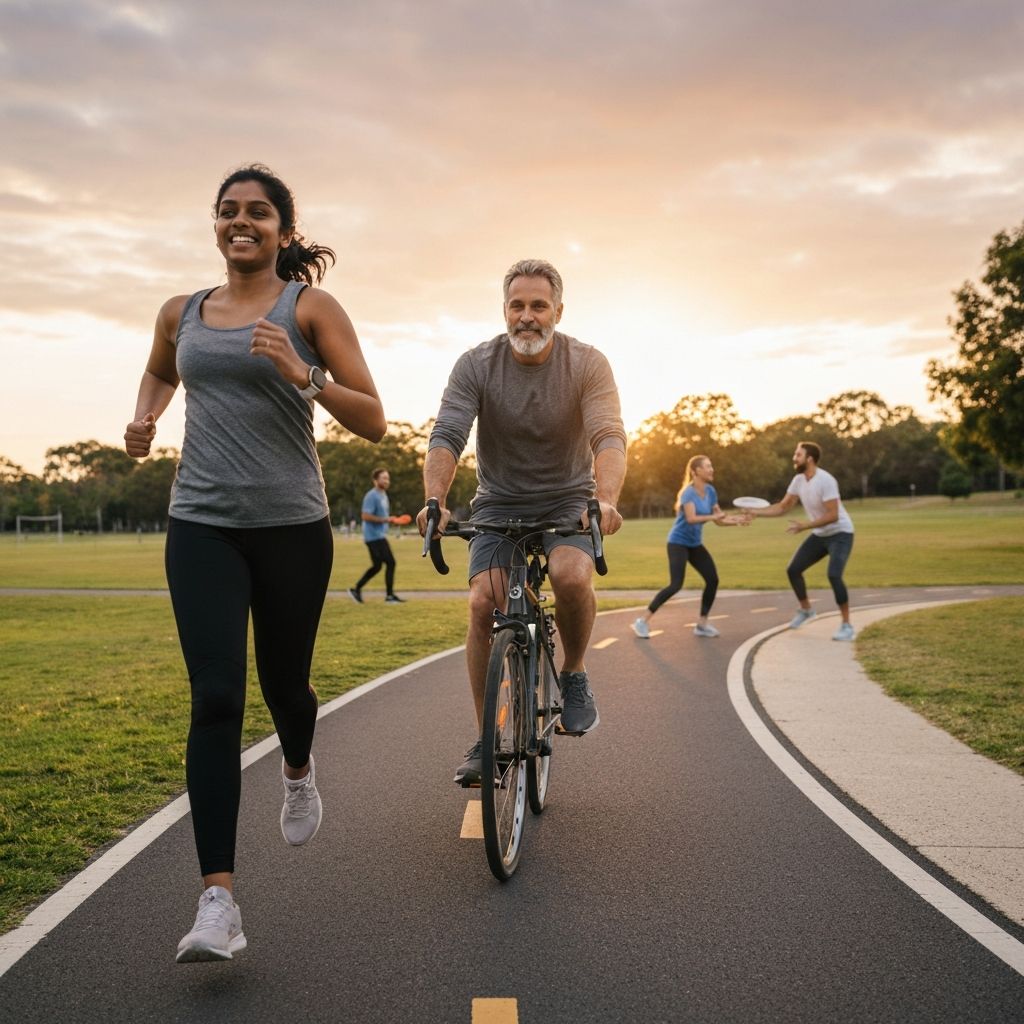
Educational exploration of physical activity patterns in daily life
Published February 2026
Physical activity encompasses a broad spectrum of movements and exercises that people incorporate into their daily lives. Understanding these patterns provides insight into how individuals maintain mobility, strength, and cardiovascular function through various means.
Activity patterns differ significantly based on factors including age, physical capabilities, available time, environmental conditions, and personal preferences. Some individuals engage in structured exercise programmes, while others maintain activity through daily tasks, recreational pursuits, or occupational demands.
Educational literature categorises physical activity into several broad types:
Aerobic Activities: These involve sustained movement that elevates heart rate over extended periods. Examples include walking, jogging, cycling, swimming, and dancing. Different intensities of aerobic activity produce different physiological responses.
Resistance Training: This category includes activities that challenge muscle strength through various forms of resistance. People use body weight, free weights, resistance bands, or specialised equipment for these activities.
Flexibility Work: Stretching, yoga, and similar practices focus on maintaining or improving range of motion in joints and muscles. These activities vary widely in approach and intensity.
Daily Movement: Routine activities such as walking to destinations, climbing stairs, housework, gardening, and occupational tasks contribute to overall activity levels without requiring dedicated exercise time.
Research observations indicate that activity patterns vary considerably across different population groups. Factors influencing these patterns include geographical location, cultural norms, socioeconomic circumstances, and individual health status.
Some communities emphasise outdoor activities, while others focus on gym-based exercise. Urban environments present different movement opportunities compared to rural settings. Work schedules, family responsibilities, and social networks all influence how and when people engage in physical activity.
Establishing activity routines involves creating consistent patterns of movement that fit within individual lifestyles. Educational discussions about routines focus on understanding how habits form and persist rather than prescribing specific schedules.
People develop routines through various means. Some schedule specific times for exercise, while others integrate activity into daily tasks. The sustainability of routines depends on numerous factors including enjoyment, practical feasibility, social support, and alignment with personal values.
Physical environments significantly influence activity patterns. Access to safe walking areas, recreational facilities, and natural spaces affects movement opportunities. Weather conditions, seasonal variations, and geographical features also play roles.
Social factors include exercising with others, participating in group activities, or engaging in individual pursuits. Different people find different social contexts supportive or motivating for maintaining activity.
Various health organisations publish general activity guidelines based on population-level research. These guidelines typically describe amounts and types of activity associated with health outcomes in studied populations.
Such recommendations serve as reference points rather than prescriptions. Individual circumstances, capabilities, and needs vary considerably from population averages. Educational content about guidelines explains their basis and context without directing specific personal choices.
Understanding one's own activity patterns involves awareness of current habits, movement opportunities, and factors that facilitate or hinder activity. This awareness forms part of broader lifestyle consciousness rather than a directive for change.
Some people track their movement using various methods, from simple observation to technological tools. Others maintain activity awareness through general reflection on daily patterns. Different approaches suit different individuals.
This article provides educational information about physical activity patterns and concepts. It describes various approaches and factors without recommending specific activities or routines.
Individual activity needs and capabilities vary significantly. People with health conditions or specific circumstances should consult qualified professionals for guidance appropriate to their situations.
No outcomes or results are promised or implied by the information presented here.